Gaza: The genocide is not over | Update January 2026
The October ceasefire has not ended Israeli bombing, displacement or killing. We continue providing winterisation, trauma support, education and emergency aid through our partners.
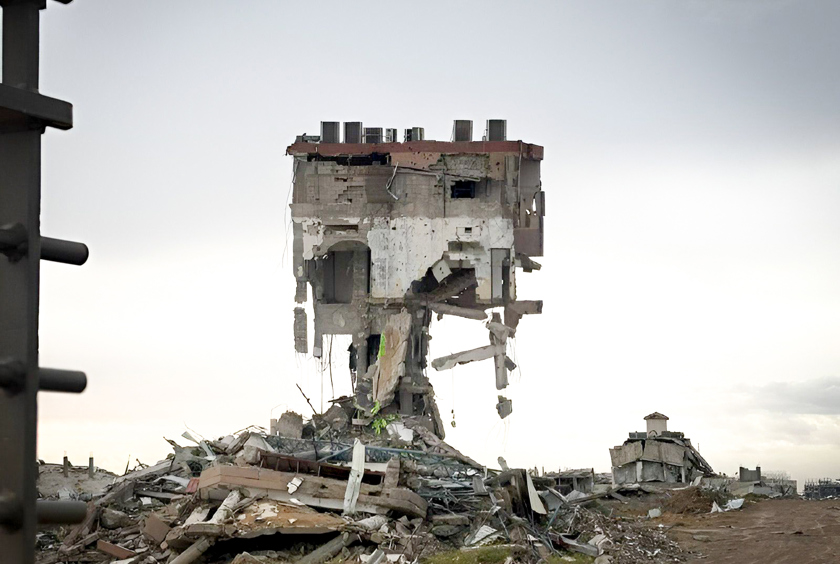
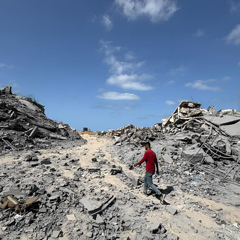
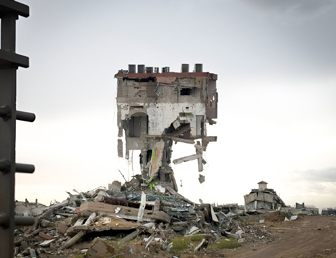
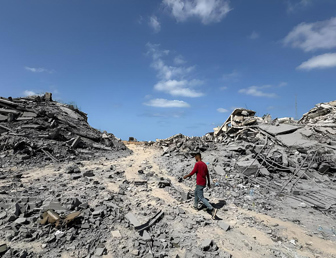
The October ceasefire may have curtailed much of the fighting, but it did not end Israeli bombing raids, the destruction of Palestinian property and the killing of civilians.
The free flow of aid which was part of this agreement has not occurred. Many shipments are refused entry or travel coordination is impeded or denied, and there are significant shortages of many materials including fuel.
On 30th December 2025, 37 NGOs received official notification that their registrations would expire on 31st December 2025 — this triggered a 60-day warning to cease activities in Gaza, the West Bank and Jerusalem. These NGOs are integral to food, shelter, health and nutrition services across Palestine.
These aid organisations joined those whose registration had already been denied for publicly criticising Israeli policies and for refusing to pass over the names and details of the staff who worked for them to the Israeli government and ultimately Israeli military. Organisations have seen this as a red line as they are legitimately concerned for their staff’s wellbeing after 579 aid workers have been killed in the genocide. For some of the organisations listed, such as our partner Near East Council of Churches (NECC), this news came out of the blue and left them trying to work out what the impact will be on their operations.
The free flow of aid which was part of this agreement has not occurred. Many shipments are refused entry or travel coordination is impeded or denied, and there are significant shortages of many materials including fuel.
The majority of the population are still trying to live in vastly inadequate tents (these are old, not fit for purpose and in short supply) or badly damaged buildings with no amenities and no adequate sanitation as winter storms have battered Gaza.
The Israeli military has not withdrawn from Gaza. Airstrikes, shelling and gunfire continue to be reported across the Gaza Strip. They remain deployed in over 50% of the Gaza Strip, on the eastern side of the ‘Yellow Line’ which remains largely unmarked on the ground and where access to humanitarian facilities and assets, public infrastructure, agricultural land and the sea are either restricted or prohibited. Detonations of residential buildings and bulldozing activities continue to be reported, and most significantly the Rafah Crossing with Egypt remains closed.
As of 6th January, 71,391 Palestinians have been killed in Gaza and 171,279 injured since October 2023 (along with over 1,000 Palestinians killed on the West Bank). Since the October ceasefire, 420 Palestinians have been killed in Gaza including 14 on 8th January alone.

Children have been told not to play so they can conserve energy
A new University of Cambridge-led report has warned that after two years of Israel’s military campaign, Palestinian children in Gaza have been left too weak to learn or play and convinced they will be killed. The report describes how violence, starvation and trauma have eradicated any sense of an ordinary childhood. It describes children collapsing from exhaustion and being told not to play so they can conserve energy. It also details the complete lack of faith in the international system or of hopes for the future among children in Gaza.
The report calls for an urgent increase in international aid to address both severe learning losses and the psychological effects of the Israeli assault on children, at the same time as many of these providers are being deregistered.
Amos’ response
Education

A women teaches children in a Tent School in Gaza
We have committed to supporting three tent schools (one in Gaza City and two in al-Mawasi) until the end of the current academic year. While schools are slowly reopening (93% of schools require partial or complete rebuilding) there is a massive shortfall of places and children are desperately in need of some normality and an education.
We are also looking to support a new pilot project with Taawon UK (formerly the Welfare Association) that seeks to integrate psychosocial trauma support with education.
Winterisation and emergency aid
We continue to work closely with Ajyal Association for Creativity and Development and MA’AN Development on emergency winterisation support — responding at speed as children’s clothes and blankets become available at something approaching reasonable prices.
Trauma support

A doctor in Gaza examines a young Palestinian boy
One million children in Gaza are deeply traumatised. Throughout this crisis, we have supported DSPR’s essential work to help children and their families cope with acute stress. While two years of attacks and displacement made specialised post-trauma therapy impossible, DSPR staff continued providing psychosocial support and teaching coping mechanisms.
They are now starting to resume their full range of specialised services from two temporary sites in Gaza City and a third in central Gaza. DSPR in Gaza is run under the auspices of NECC and we are following closely how re-registration might impact this.
Women’s development and health programmes

We have supported two bread oven programmes with Ajyal Association in Gaza City
We are keen to move as quickly as possible towards delivering more rights-based programmes — particularly focusing on women.
We have supported two bread oven programmes with Ajyal Association in Gaza City. Mothers who are lone breadwinners responsible for 10 or more dependants are given a bread oven, training in its use and a start-up pack of flour, wood etc, so that they can provide a much-needed service to their communities and provide an income to their families.
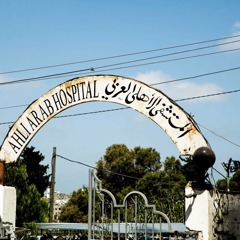
Our long-term partner the Al Ahli Arab Hospital is still playing a vital role as a major medical hub in Gaza City — despite its small size. As soon as they are in a place to carry out their normal range of services we will resume support for their breast cancer services.
Journalism

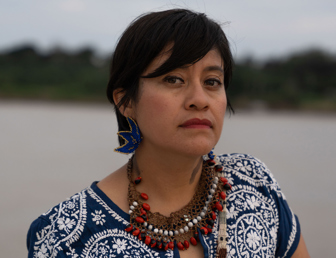
Walaa Sabbah from We Are Not Numbers in Gaza
We continue to work closely with We Are Not Numbers (WANN) to support young journalists in Gaza. They continue to play a vital role as the international media remains banned from entering Gaza.
WANN are also looking to resume their training programmes for young writers as quickly as possible and are currently assessing the best way to deliver these.