Amos Climate Fellowship
Empowering Women Land Defenders in Mexico and Central America
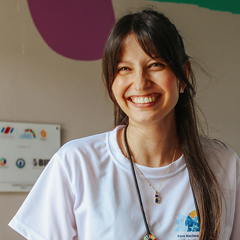

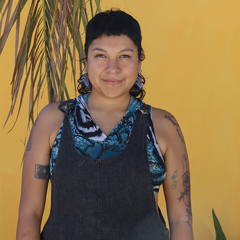


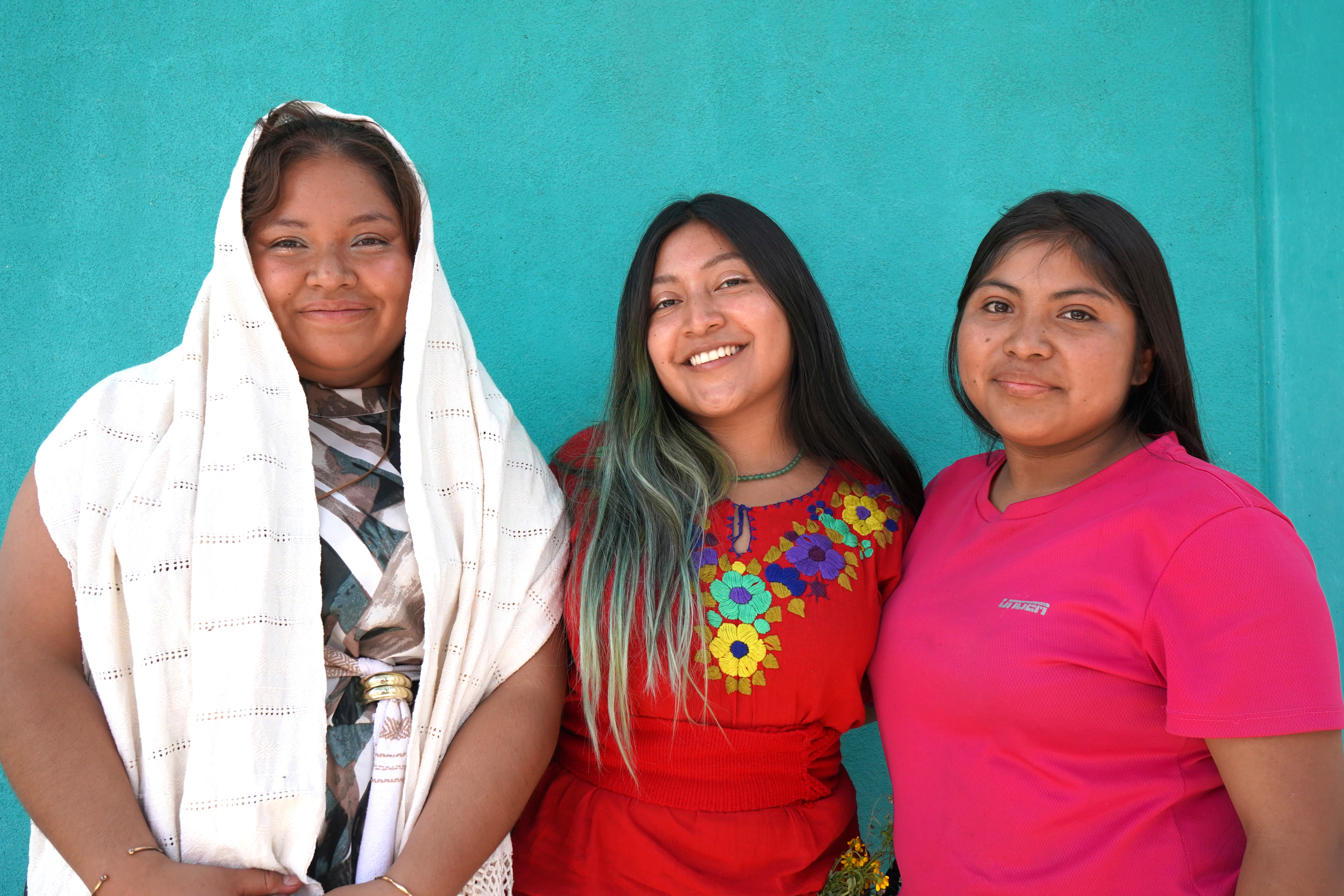
“We come here to learn, because one comes to the territories to learn. We are the ones who learn, we never come to teach, maybe sometimes we have something to share, but we almost always learn from the land, we learn from the women.”Ana Lucía Ixchiu, Climate Fellowship participant
Why this Fellowship exists
Mexico and Central America is home to some of the most biodiverse ecosystems on Earth — and some of the most dangerous conditions for those defending them. Women land defenders and climate activists face violence, marginalisation and systemic threats as they protect their territories from extractivism, deforestation and environmental destruction.
Yet these women are leading some of the most innovative and inspiring climate action on the planet. Rooted in Indigenous knowledge, ancestral wisdom and deep connection to their lands, they’re weaving community-driven solutions to the climate crisis.
The Amos Trust Climate Fellowship exists to support them.
Watch our short film about the Amos Climate Fellowship →
Meet the Climate Fellowship cohort →
What we offer
The Climate Fellowship is a 12-month programme supporting young women land defenders and climate activists across Mexico and Central America. Each year, we bring together 12 fellows who receive:
- Funding
Up to $2,500 USD per project to implement climate-gender initiatives in their communities. - Training
Project management skills, feminist learning approaches and capacity building throughout the programme. - Network
A supportive community of women defending their lands, sharing knowledge and building collective strength. - Amplification
Platforms to share their stories, experiences and solutions through conferences, podcasts, blogs and other media. - In-Person Learning
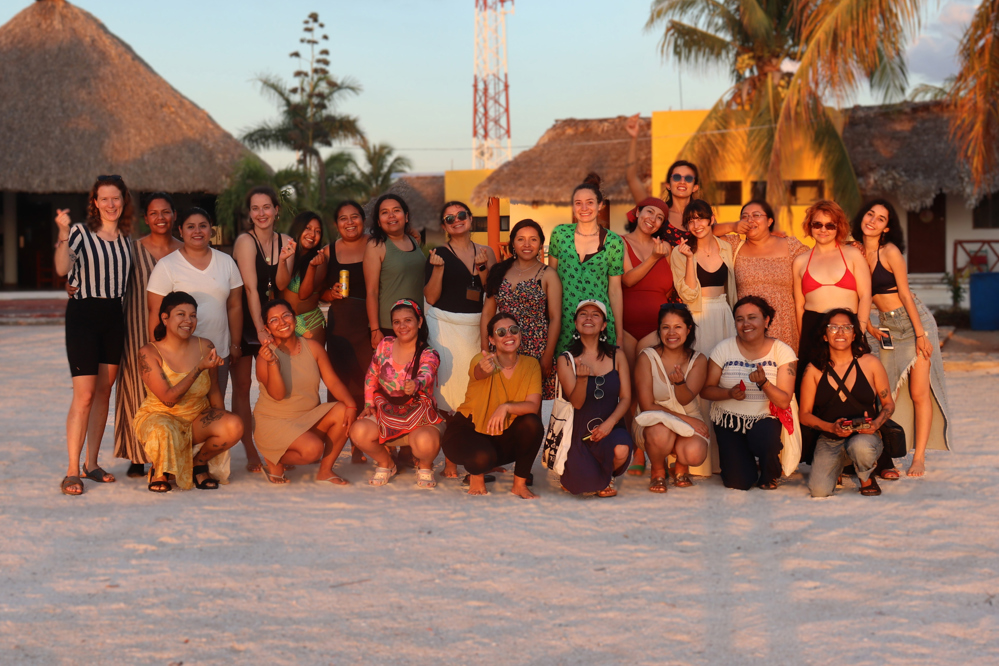
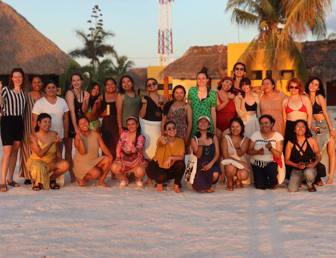
A week-long gathering in Mexico where fellows from current and past cohorts exchange insights, learn together and build solidarity.
The projects we support
Fellows design and lead projects that address at least one of these goals:
- Reducing women’s climate vulnerability
Providing knowledge, resources or tools to help women adapt to climate impacts and strengthen resilience. - Increasing women’s participation in climate action
Amplifying women’s voices and building their capacity to lead in land defence and climate justice. - Safeguarding habitats and lands with a gender perspective
Protecting ecosystems while centring women’s leadership in conservation and community solutions.
Projects can be new ideas or existing initiatives ready to scale. All must demonstrate sustainability beyond the six-month implementation period.
Who we support
The Fellowship is open to women aged 18–35 in Mexico and Central America (Guatemala, Belize, Honduras, El Salvador, Nicaragua, Costa Rica and Panama). We actively encourage applications from trans women, LGBTIQ+ women, women of colour, women with disabilities and Indigenous women — recognising that climate justice and gender justice are deeply interconnected.
Why Mexico and Central America?
This region experiences profound gender disparities in how climate change impacts communities. Patriarchal structures place disproportionate burdens on women due to their caregiving roles and dependence on land and ecological systems. Women are often excluded from decision-making spaces around environmental policies and land protection.
At the same time, the region faces extreme weather events, rising temperatures and the expansion of extractive industries that endanger local environments and ways of life. Supporting women land defenders creates a more inclusive and effective response to these intersecting crises.
A network of solidarity
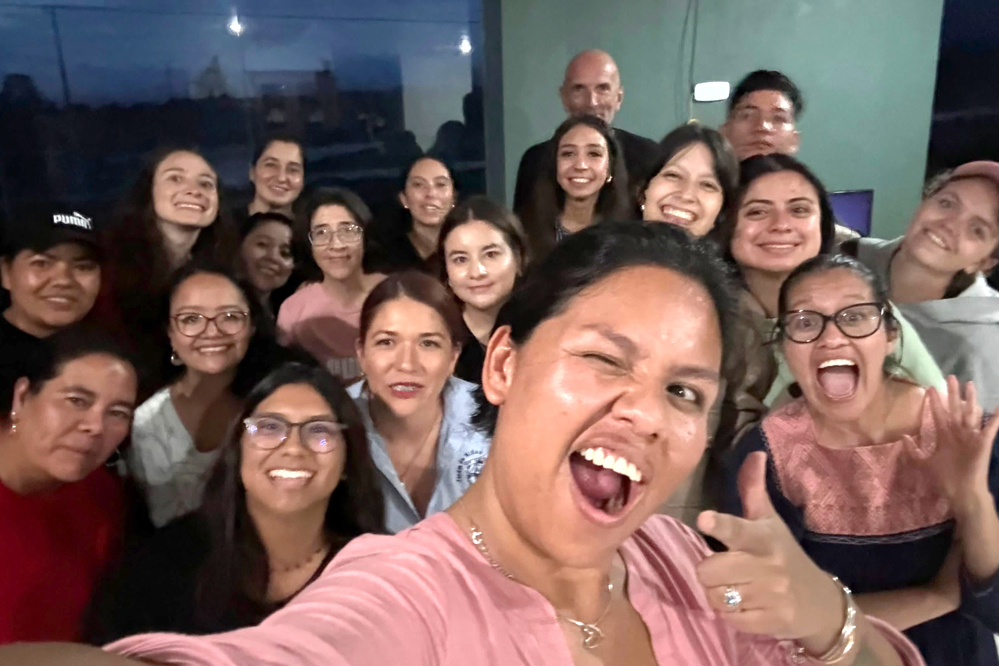
Through the Fellowship, we’re building a network of young women united in their commitment to climate action and land defence. We believe in “holding together” — creating spaces that foster belonging, collective strength and resilience.
Fellows connect across borders, learn from each other’s experiences and carry forward the knowledge and courage needed for the long fight ahead.
Meet the Fellows
Explore profiles of our current and past fellows →
Support the Fellowship
The Climate Fellowship is made possible by people like you. Your donation directly supports young women on the frontlines of climate justice.
Glossary
The Climate Fellowship uses language rooted in the movements we support — particularly concepts from Latin American Indigenous activism and decolonial ecofeminism. This glossary explains key terms that describe the realities our fellows face and the frameworks that guide their work for climate justice.
Land Defenders
People who actively protect their land, ecosystems and ways of life from large-scale projects like mining, industrial agriculture, tourism developments, or real estate. They’re often Indigenous communities, rural women and local residents. Land defenders don’t just resist exploitation — they nurture and sustain the land, knowing that their own well-being depends on its health.
Ecofeminism
A movement that explores the connections between the oppression of women and the degradation of the Earth. In Latin America, ecofeminists take an intersectional approach, linking different forms of oppression to ecological exploitation. They defend women’s bodies and the land, emphasising that the two cannot be separated.
Body–Land
A concept from Latin American ecofeminism that recognises the inseparable unity between the body and the land it inhabits. What affects one inevitably affects the other.
Women land defenders often make this connection in both directions. Poisonous agrotoxins poured onto the soil enter their bodies, causing illness — a form of violence that moves from the land into them. An example of this is the harmful fertiliser glyphosate being found in women’s breastmilk in Campeche, Mexico.
At the same time, the sexual violence many women experience reflects the same violence imposed onto the land through open-pit mining and extraction: both leave the land or the body wounded. Land defenders are acutely aware of this violence because their gender and frontline work make them particularly vulnerable to physical, social, and environmental harm.
However, the body–land is also a site of care and resilience. Many ecofeminists emphasise the importance of healing the body and the land together, recognising that protecting and restoring one nurtures the other. For instance, through growing food without chemicals, they help heal both the contaminated land and the bodies that consume organic, pesticide-free food.
Extractivism
The large-scale extraction of the Earth’s resources — minerals, oil, timber, water and more. Industries, mainly based in the Global North, enter territories in the Global South attracted by biodiversity, energy, cheap labour, and favourable conditions offered by local governments. Tourism can also function as an extractive industry when it commodifies land, water, ecosystems, or cultural heritage, often displacing local communities, disrupting social structures and degrading natural environments.
These industries frequently establish themselves in “sacrifice zones”: territories largely inhabited by Indigenous peoples and other marginalised communities. Their presence causes severe environmental and social harms, including contaminated ecosystems, loss of essential resources for life, breakdown of social structures, and forced displacement. Extractivism prioritises profit over life, removing what the Earth holds regardless of the human suffering and ecological destruction it leaves behind.
Neo-Colonialism
The ways in which territories in the Global South — many of which were once colonised by European and other Northern powers — continue to experience forms of control and domination after formal independence. Although colonial rule no longer operates through direct political power, it persists through new mechanisms that maintain the flow of wealth, power, and decision-making towards the Global North, including debt, trade agreements, multinational corporations, and international financial institutions.
Neo-colonialism also operates domestically. Many post-independence governments adopted and reproduced colonial ways of working, reinforcing systems of domination over Indigenous peoples and other marginalised groups. It also affects culture, knowledge, and ways of life, imposing Northern-centric worldviews while marginalising local and Indigenous knowledge. At its core, neo-colonialism continues to prioritise the interests of the Global North over the well-being of communities and territories in the Global South.
Patriarchy
A social system in which men hold primary power and authority in political, economic and social spheres, often leading to the marginalisation of women, gender-diverse people, and other oppressed groups. In the context of land and environmental struggles, patriarchy intersects with extractivism and neo-colonialism, shaping who has access to resources, whose knowledge is valued, and who bears the burdens of environmental harm. Ecofeminist and Indigenous perspectives highlight how patriarchal structures not only oppress women but also contribute to the exploitation of the Earth.
Indigenous cosmologies
The worldviews, spiritual beliefs, and knowledge systems of Indigenous peoples that understand humans, land, water and all living things as interconnected and mutually sustaining. Indigenous cosmologies inform sustainable practices, social structures and how territories are governed, guiding how to live in balance with ecosystems. In the context of land defence and ecofeminism, these cosmologies shape strategies that protect the Earth and promote collective well-being, resisting approaches that treat nature as a commodity.
Climate Justice resources
Take a look through our range of resources, blog posts and downloads to find out more about our Climate Justice work.


Join our mailing list
Words of hope
Get our emails direct to your Inbox with updates about all our campaigns, trips and events.